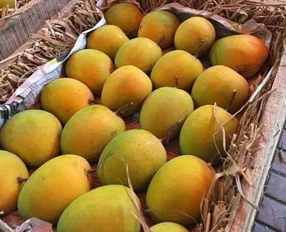
Mangifera indica ‘Alphonso’ | Hapus | King of Mangoes | Ratnagiri Mango
The Alphonso mango, known as Hapus in Maharashtra, is widely regarded as the finest mango variety in the world. With its deep golden-orange flesh, intoxicatingly sweet and rich aroma, and smooth, fibre-free texture, it is a true seasonal luxury. Grown primarily in the Konkan coast of Maharashtra, each fruit is a masterpiece of natural sweetness.
Health Benefits
Extraordinarily rich in vitamin C and vitamin A — supports immunity and skin health
Packed with beta-carotene and other antioxidants
Contains digestive enzymes (amylase) — aids digestion naturally
Good source of potassium and B6 — supports heart and nervous system health
Natural source of energy — ideal during summer
Nutrition: Calories: 60 kcal | Vitamin C: high | Vitamin A: very high | Carbs: 15g (per 100g)
Culinary Uses: Best enjoyed fresh. Used in aamras (mango pulp), mango lassi, ice cream, sorbets, cakes, and chutneys. The pulp is also tinned and exported worldwide.
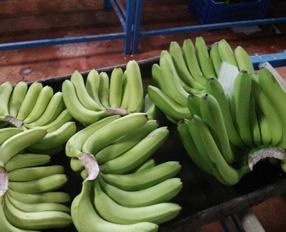
Musa acuminata ‘Grand Naine’ | G9 Banana | Grand Naine | Tissue Culture Banana
The G9 Cavendish banana is a premium variety of the popular Cavendish, cultivated from tissue culture for uniform size, appearance, and superior quality. Slightly larger than standard bananas with a thicker, more robust peel and exceptionally sweet, creamy flesh, the G9 has become the preferred variety for both retail and export markets.
Health Benefits
Excellent source of potassium — supports heart function and muscle health
Rich in vitamin B6 — essential for brain health and mood regulation
Natural energy booster — easily digestible sugars for quick energy
Contains resistant starch in unripe form — acts as a prebiotic for gut health
Good source of magnesium, vitamin C, and dietary fibre
Nutrition: Calories: 89 kcal | Potassium: very high | Vitamin B6: high | Carbs: 23g (per 100g)
Culinary Uses: Eaten fresh as a snack. Used in smoothies, banana bread, pancakes, and desserts. Unripe G9 banana can be cooked in savoury preparations and curries.
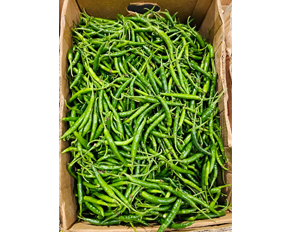
Capsicum annuum (G4 variety) | Green Chilli | Hari Mirch | Pachamilagai
The G4 is a popular Indian variety of green chilli known for its medium-to-high heat, bright green colour, and aromatic pungency. Slender and firm, it is a daily staple across Indian households and a fundamental ingredient in curries, chutneys, and street food.
Health Benefits
Rich in vitamin C — one chilli can provide a significant portion of the daily requirement
Contains capsaicin — known for anti-inflammatory and metabolism-boosting properties
Supports immunity and has natural antibacterial properties
Culinary Uses: Used extensively in Indian cooking — in tadkas, curries, chutneys, pickles, and as a raw accompaniment. Can be stuffed and fried as mirchi bhaji.
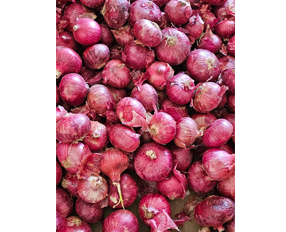
The Indian red onion is the backbone of South Asian cooking. Smaller and more pungent than Western varieties, with deep purplish-red layers and a sharp, intense flavour that mellows beautifully when cooked. Its high sugar content caramelises well, lending rich depth to curries and gravies.
Health Benefits
Rich in quercetin — a powerful antioxidant with anti-inflammatory properties
Contains allicin — supports heart health and has antibacterial properties
Good source of vitamin C and B vitamins
Prebiotic properties — feeds beneficial gut bacteria
Traditionally used to support immunity and reduce blood sugar
Culinary Uses: The foundation of virtually every Indian curry, biryani, and gravy. Eaten raw in salads and raitas, pickled, fried into crispy onions, or caramelised as a base.
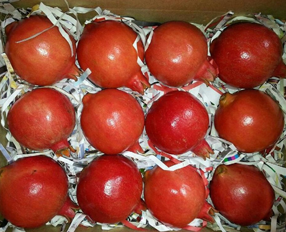
The pomegranate is an ancient, jewel-like fruit with a tough red skin encasing hundreds of ruby-red arils — seed-filled juicy sacs with a bold, sweet-tart flavour. One of the oldest cultivated fruits in human history, it holds a revered place in Ayurveda, traditional medicine, and cuisine across South Asia, the Middle East, and the Mediterranean.
Health Benefits
Exceptionally rich in punicalagins and punicic acid — among the most powerful antioxidants found in nature
Strong anti-inflammatory properties — beneficial for arthritis and heart disease
Supports cardiovascular health — reduces blood pressure and LDL oxidation
Contains vitamins C and K, folate, and potassium
Studies suggest benefits for memory, gut health, and cancer prevention
Culinary Uses: Arils eaten fresh as a snack or garnish. Juiced for pomegranate juice and molasses. Used in raitas, salads, chaats, smoothies, and cocktails. Adds colour and flavour to biryanis.
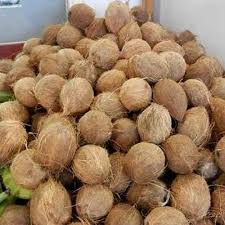
Cocos nucifera | Partially Husked Coconut | Brown Coconut
A semi-husked coconut retains a portion of its outer fibrous husk, making it easier to handle than a fully husked coconut while still being fresh and full of coconut water. The white flesh inside is mature, rich, and flavourful — used extensively in South Asian, Southeast Asian, and tropical cuisines.
Health Benefits
Coconut water is a natural electrolyte drink — rich in potassium and magnesium
The flesh provides healthy medium-chain fatty acids (MCFAs) for quick energy
Supports digestive health — fibre and lauric acid have antimicrobial properties
Good source of manganese, copper, and selenium
Traditionally used in Ayurveda for skin, hair, and digestive health
Culinary Uses: Grated fresh for chutneys, curries, and sweets. Pressed for coconut milk and cream. Coconut water drunk fresh. Used in Kerala cuisine across virtually every dish.
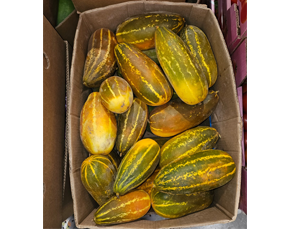
Cucumis melo var. utilissimus | Indian Cucumber | Vellarikka | Dosakai | Yellow Cucumber
Vellari, known as vellarikka in Kerala, is a traditional Indian cucumber variety with a light yellow to pale green exterior and crisp, mildly sweet flesh. Less watery than regular cucumbers, it has a pleasant, slightly tangy flavour and is a staple in South Indian cooking and raw consumption.
Health Benefits
Highly hydrating — excellent water content for a cooling, refreshing effect
Very low in calories — ideal for weight management
Contains silica — beneficial for skin and joint health
Supports kidney health and natural detoxification
Rich in vitamins K and C, and a good source of magnesium
Culinary Uses: Eaten raw with salt and chilli. Used in South Indian pachadi (yoghurt-based side dish), raitas, and chutneys. Also prepared as a simple stir-fry or in dal.